
Since the 4th century, Christians, clergymen, plebeians, emperors and sovereigns have undertaken epic adventures on foot to Rome, the Holy Land and Santiago de Compostela. Sigeric, Archbishop of Canterbury, documented his return journey from Rome (AD990), which had the most significant influence on successive pilgrimages. Traditionally, the journey was taken as an act of devotion and pilgrims would stop along the way at places deemed holy. Both routes are hugely enjoyable, steeped in history and offer memorable journeys for walkers seeking spiritual, cultural or physical challenges.
The Via Francigena stretches from Canterbury, England to the eternal city of Rome via a 1,900-kilometre-long pilgrimage route; traversing picturesque landscapes of France, Switzerland and the Tuscan countryside of Italy. This ancient route is the trail less travelled in comparison to its well-known Spanish counterpart, the Camino de Santiago. Walkers on this route can appreciate its tranquillity, as cultural and historical riches are set against the backdrop of the rolling Tuscan hills and the majestic Alps.
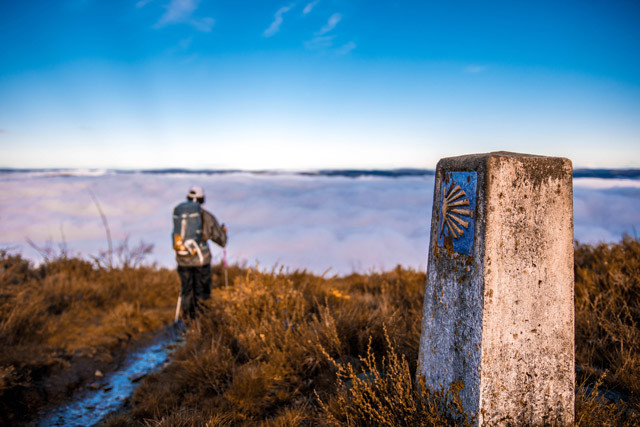
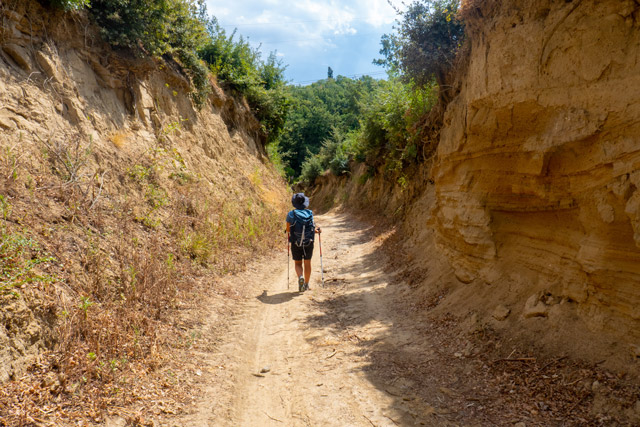 The Camino de Santiago, or the Way of St James, traverses Europe to reach the Romanesque Cathedral of Santiago de Compostela in Spain. This well-known pilgrimage, with a truly magnificent end destination, attracts many pilgrims each year. The camaraderie shared along the way between a global community of walkers makes this a uniquely fulfilling experience.
How long does it take to walk these routes?
Across each of the five pilgrimage walks discussed here, each day varies in length from a minimum of four hours of walking (nine kilometres distance covered) to seven hours of walking (27 kilometres distance covered). Each of the trails are good and are waymarked. Walking times are approximate but on the conservative side, based on average fitness levels, terrain, local weather etc.
Via Francigena
Via Francigena: From Lucca to Siena
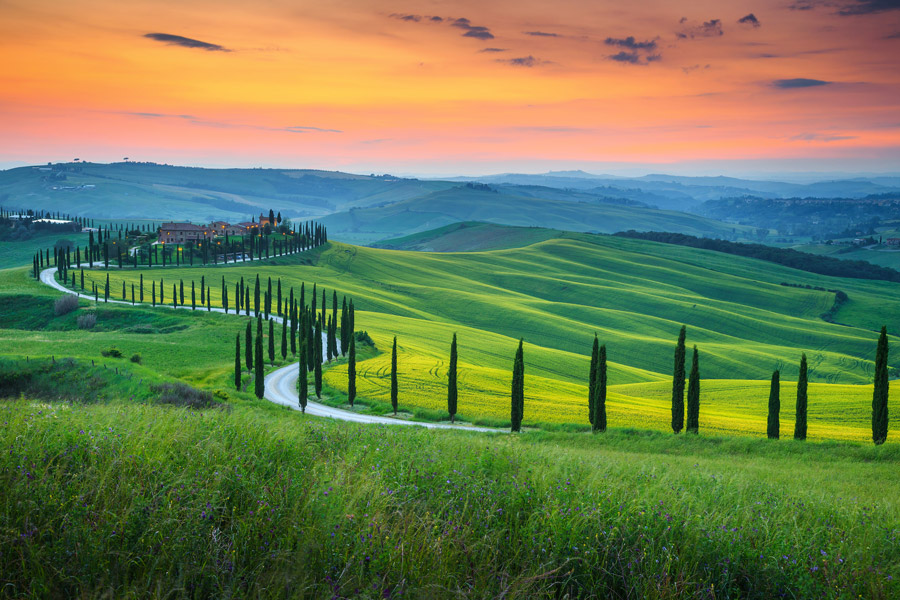 The Northern Tuscany section of Via Francigena starts in the medieval walled city of Lucca, with its amazing Renaissance wall and citadel. The first stage of the tour is through the open and flat lands of the Val d’Elsa. Then you explore the medieval atmosphere felt in the narrow sandstone streets and the buildings of the most popular medieval villages in Tuscany, such as Monteriggioni and San Gimignano, which, with its 13 outstanding towers, became a UNESCO World Heritage Site in 1990. Before reaching Siena, a historical, artistic, cultural and gastronomic gem, you can enjoy a landscape made of open rolling hills with grey crags of the beautiful and picturesque Crete Senesi.
What’s on?
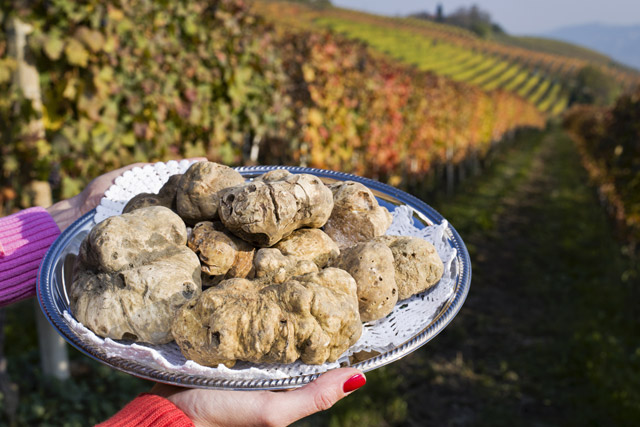
If you walk in Autumn, foodies are in for a treat, as this part of Tuscany is famous for its white truffles. San Miniato hosts the White Truffle Fair. Whenever you choose to walk, you can taste delicious cuisine along your route.
 Highlights
- The spectacular landscapes of the Tuscany countryside
- The historical fortified military village of Monteriggioni
- The charming UNESCO towns of San Gimignano and Siena
- Delicious Tuscan culinary specialities
Via Francigena: From Siena to Montefiascone
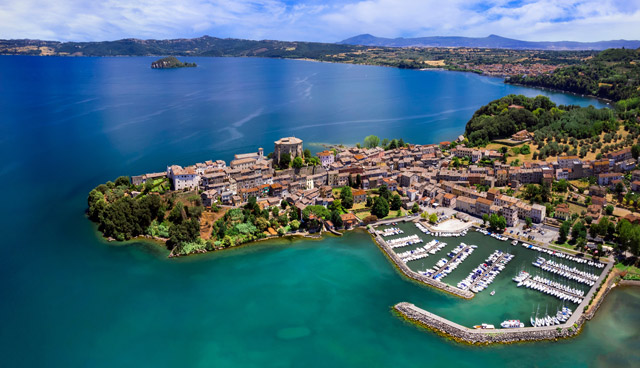
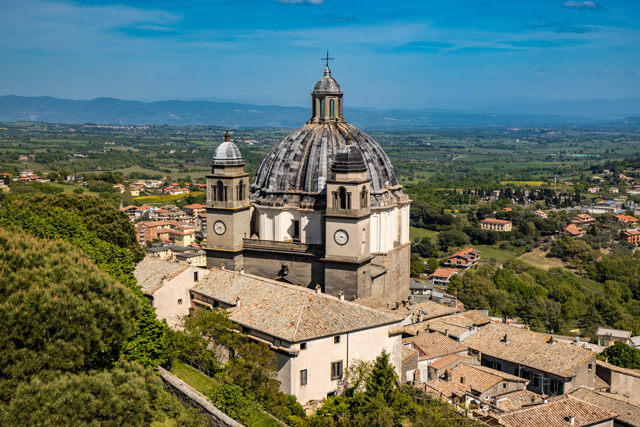
Hike the renowned strade bianche/white roads (dirt roads) of Siena in this southern section of the Via Francigena. Cross the Val d’Arbia and the Val d’Orcia, icons of the Tuscan landscape. Visit the wonderful local villages of Bagno Vignoni, with its grand thermal pool in the centre of the square and Radicofani, whose fortress dominates southern Tuscany. Once you enter Lazio, be in awe of the beauty of Lake Bolsena and charmed by the ancient paving stones of the old Roman street, Via Cassia, before visiting the charming old town centre of Viterbo.
 Cross the vineyards of the Brunello di Montalcino and the production zones of the cacio di pienza (type of cheese), before entering one of the most important areas for the production of extra-virgin olive oil, between Bolsena and Montefiascone. This trip bridges the Tuscan and Lazio regions, showcasing the transition from Tuscany’s iconic landscapes to the more rugged and volcanic scenery of Lazio.
What’s on?
Enhance your experience by timing your walk to coincide with special events happening during the pilgrimage. In August, Montefiascone host an annual wine festival celebrating their Est! Est!! Est!!! wine when the streets come alive with festivities and outdoor dining. The Palio du Siena takes place in July and August.
 Highlights
- Admire the Siena skyline from the crests of the Val d’Arbia
- Enjoy the thermal pools of Bagno Vignoni
- Walk barefoot on the paving of the Via Cassia in Montefiascone
- Enjoy the Est! Est!! Est!!! white wine of Montefiascone
Via Francigena: From Montefiascone to Rome
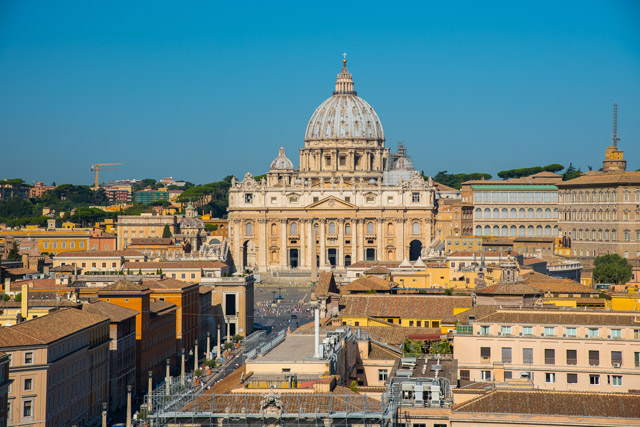
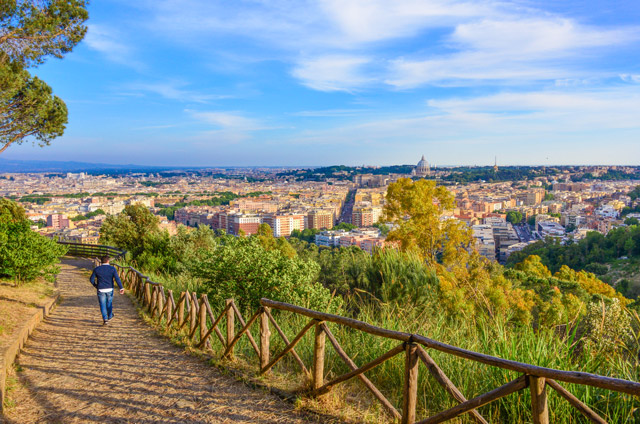 The final section of the Via Francigena takes you from the hilltop town of Montefiascone to Rome, the eternal city. Before you begin your walk, enjoy fantastic views over Lago di Bolsena and Viterbo from Montefiascone, one of the best-preserved medieval towns in the Lazio region. Follow trails through the rural and pristine areas of Italy that many tourists do not visit. Become immersed in the true culture of these stunning regions, passing many hilltop towns, Roman ruins, Papal Palaces, and thermal pools. Spend a night in Sutri and wander through its enchanting old quarter, discovering the Roman amphitheatre ruins of an old Etruscan city. Pass rivers, streams, and waterfalls and walk through the serene green valley of Sorbo. Walk directly into Rome through the parks of Insugherata and Mount Mario to receive your Testimonium certificate when you arrive at St Peter’s Basilica.
What’s on?
If you choose to time your walk over Easter, you could arrive in Rome on Good Friday and witness the Easter celebrations at the Vatican! The Montefiascone annual wine festival takes place in August, when the streets come alive with festivities and outdoor dining.
 Highlights?
- Spend an evening in the neighbourhood of Pellegrino, in Viterbo
- Walk along Via del Signorino at dawn, an ancient Etruscan track
- Admire the frescoes in the church of Santa Maria del Parto in Sutri
- Enjoy the first site of St. Peter’s dome from the Monte Mario viewpoint
When to go?
This route is most sociable between Spring and Autumn, and the weather is also good.
Camino de Santiago
Camino de Santiago: The French Way
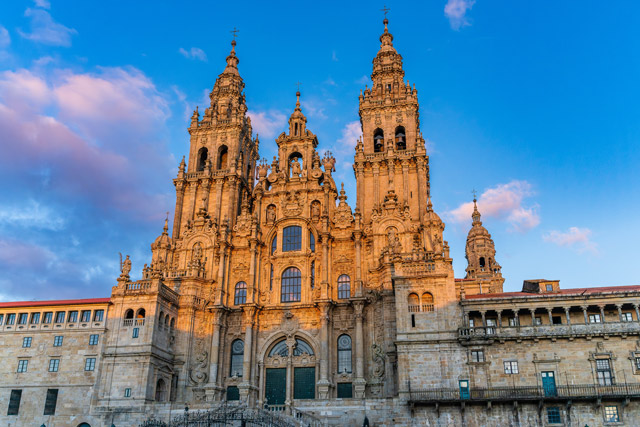 The last 100 kilometres from Sarria to Santiago is the most popular route. It’s a great option for those seeking a social walking holiday or if it’s your first time walking the Camino de Santiago. It perfectly captures the essence of the Camino: meet fellow pilgrims, discover local traditions, and enjoy the unique atmosphere of it all, rewarding yourself with good food and local wine after your day’s walk. Begin in Sarria, a small, pleasant town with many cafés where you can relax and take in the ambiance. Your route will take in the market towns of Portomarin, Melide and Azua and the wonderful atmosphere of Galicia. On completing the final 100 kilometres of the Santiago de Compostela Camino walk, you can receive the Compostela pilgrim certificate from the Pilgrim’s Office before exploring and this UNESCO World Heritage City.
What’s on?
Time your walk with celebrations taking place in Santiago on arrival. Festas da Ascensión in May (celebrating Saint James Day) is one of the main celebrations in Santiago, with outdoor concerts and many other events taking place.
Highlights
- In Sarria, try the traditional Pulpo a Feira
- In Salceda, take a break next to the monument to the pilgrim William Watt (who died two days before reaching Santiago)
- Get to know the "Land of Cheese" in Arzúa
- By booking The French Way In Style option with Walks Worldwide, you stay in character hotels en route
When to go?
May-June and September are the best time to complete the Camino walk, as the weather is pleasant, and you’ll have plenty of company along the way – but it won’t be quite as crowded. Easter can be a busy.
Camino de Santiago: The Coastal Way
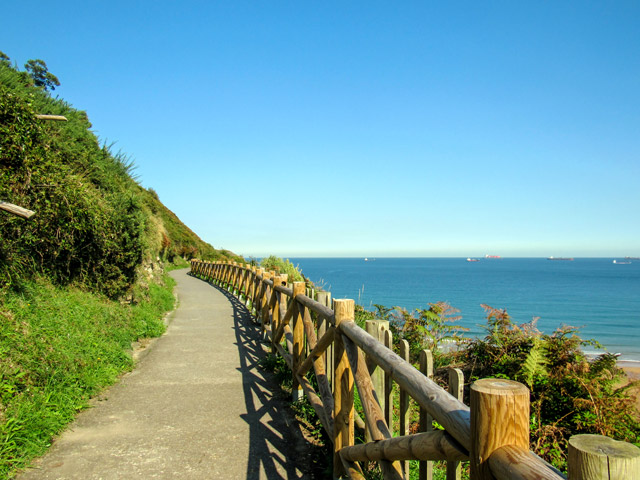 This coastal way starts in the elegant fishing village of Baiona near the Portuguese border. Here you can visit the historic Monte Real castle, stroll along the port and swim in the bay before starting your journey to Santiago. On route, you take in beautiful Vigo, enjoying views of the magnificent Illas Cíes and Vigo Bay, its estuary marked by commercial and fishing vessels. Walking through the heart of the Rías Baixas, sample the local Albariño white wine and delicious shellfish. This is a beautiful alternative to the busier Camino Frances. In the market town of Redondela, you merge with the Central Camino de Santiago. En route to Santiago you pass through the quaint village of Pontesampaio, the historic city of Pontevedra, the relaxing spa town of Caldas de Reis, and Padrón, where the boat carrying St. James’ body is said to have landed. In Santiago de Compostela, you're eligible for the Compostela certificate.
What’s on?
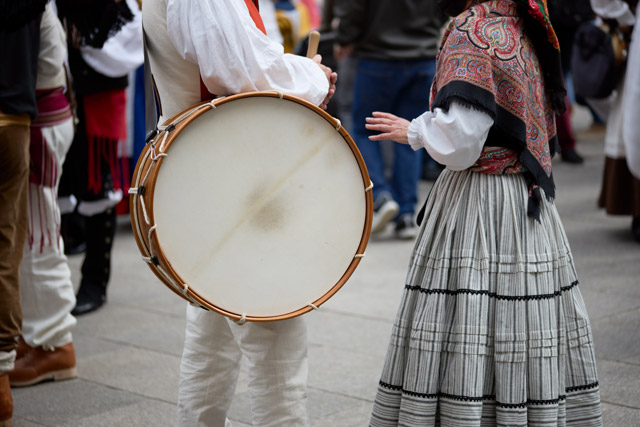
In August, time your walk to coincide with the Padrón Pepper gastronomic festival in Padrón, home of the famous green peppers. Or, in Vigo, the Reconquista festival marks the victory over Napoleon’s army at the end of March with re-creations, music and dance celebrations.
 Highlights
- View where Carabela La Pinta made port after returning from the Americas in Baiona
- Wander among the maze of backstreets in Pontevedra
- Explore the small city of Padrón, the site where the stone barge that transported the remains of Saint James reached Spain
- The Coastal Way offers a more scenic and peaceful alternative to the French Way
When to go?
The spring and summer are ideal times to walk this route, from April to September or even October. The weather can be mildly rainy during the year but tends to clear up in the summer months.
How long does it take to walk the Camino de Santiago?
The duration and length varies depending on the route you take, however, the Coastal Way includes four to six hours of hiking a day, whereas the French Way involves four to eight hours a day.
View all our pilgrimage walking holidays, including Camingo de Santiago or Via Francigena, or to book your place and walk in the steps of pilgrims, contact our team today!