The trail clung to the bare, ochre cliffs, seemingly defying gravity, while the Atlantic thundered below. Any whales out there – and they were there, so I’d been told – were invisible in the white-capped fizz. I almost couldn’t take it all in: the brutal drama, the deafening roar.
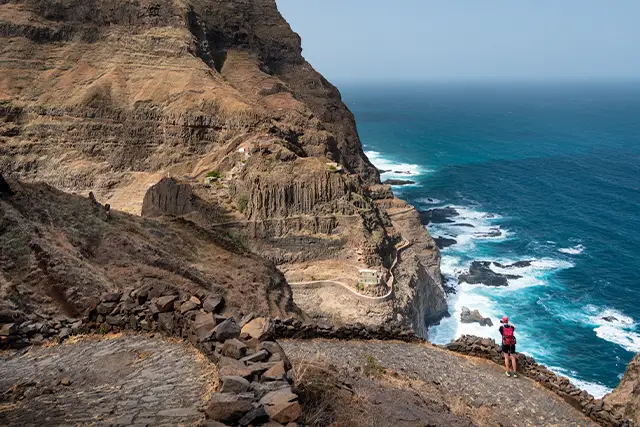 Then, rounding a bluff, I saw the village of Fontainhas ahead, its rainbow-hued houses balanced on a ridge so narrow it seemed a gust of wind might topple it into the abyss. It stood as a testament to human perseverance in the face of Mother Nature at her most raw.
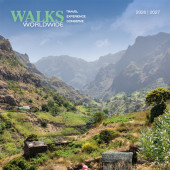
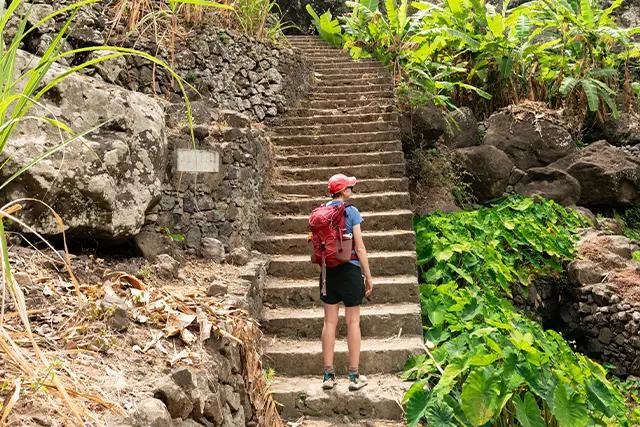 This wasn’t the Cape Verde most people know — if they know it at all. Most brochures that feature this remote archipelago off the West African coast highlight the beach-lazing beauty of Boa Vista and Sal. But Santo Antão, Cape Verde’s wildest isle, is something entirely different. It’s a place where the earth feels naked and exposed, as if still recovering from its volcanic birth; a place of towering crags and parched ravines, improbably perched hamlets, and valleys of vibrant green.
A landscape of extremes, it’s not an easy place to live. But, as outsiders are beginning to discover, it’s a wonderful place to walk. The trails used by locals for centuries – often the only way to navigate here – make it a hiker’s heaven.
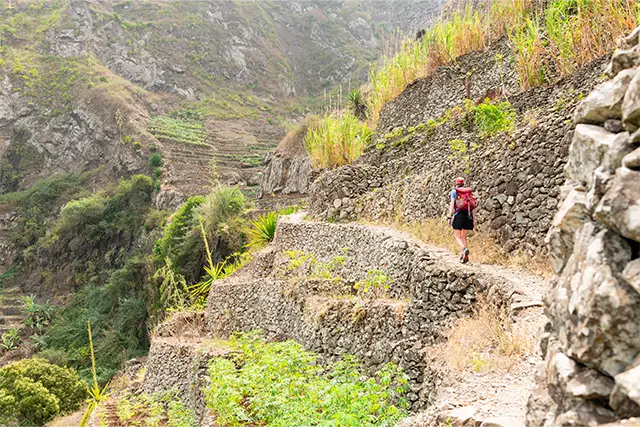 There’s no airport on Santo Antão – there’s barely a scrap of land flat enough. I reached it via a short ferry hop from neighbouring São Vicente and, not long after disembarking, was trekking up the Ribeira do Paúl. This striking valley is Santo Antão at its lushest. Its jagged sides are cut with terraces; sugarcane and banana palms swayed in the breeze, and farmers, bent double, worked fields of spring onions and manioc.
Climbing further, I reached a few houses on a ridge, where the enterprising Alcinda Fonseca has set up a café. As I sipped a cup of her freshly brewed coffee, she pointed to the bushes where the beans had grown. It was like drinking the essence of the island itself: strong, earthy, unyielding.
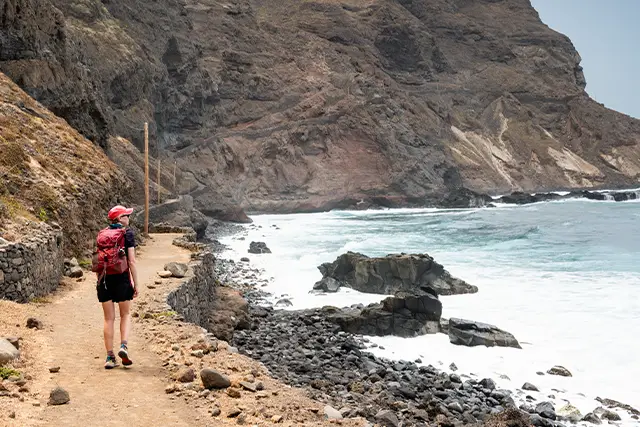 There’s no way to get to Alcinda’s other than on foot, as is the way with much of Santo Antão. It was only by hiking that, over the course of a week, I discovered the abandoned village of Aranhas, its stone houses crumbling toward the sea. It’s how I stumbled upon a man feeding sugarcane into his trapiche, the machine extracting juice to make potent local grogue. And it’s how, after hair-pinning up the mighty rock face of the Ribeira das Patas, I met Juan Bautista, who ekes out a living growing corn atop the otherworldly plateau. The views from here, across the dry, snaking riverbeds and up to the island’s highest peaks, were magnificent. Juan’s story of survival – which I gleaned through a mix of sign language and guesswork, as he spoke no English – was even more moving.
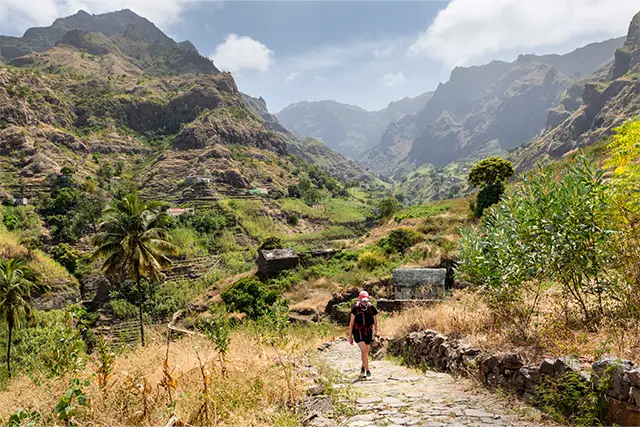 Santo Antão is not like anywhere else. Hiking here isn’t just about breathtaking scenery. It’s about connecting with a place that feels elemental, where every step seems to take you closer to the edge of the world.
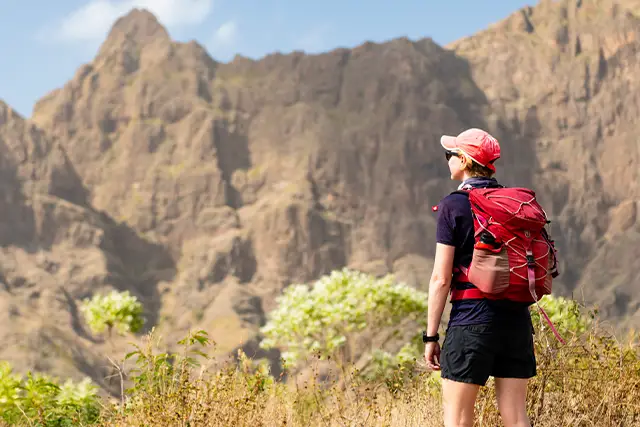 Images by Justin Foulkes
Contact our expert team to begin planning your self-guided walking trip to Cape Verde today!