What could be better after three long months of “confinamiento” (the Spanish version of lockdown was strict, with even children being confined indoors for the best part of two months) than to head into the foothills of the Sierra Nevada and check out the GR7 footpath that traverses the Alpujarra region?
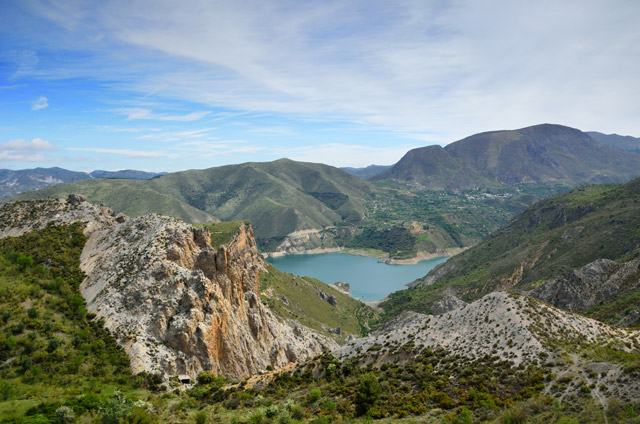 The Alpujarra are a series of valleys situated on the southern-facing slopes of the Sierra Nevada mountain range. The joys of being outdoors, reconnected to nature, were recompense for the strictures of lockdown and the meditative step by step progress cleared away the mental cobwebs like never before.
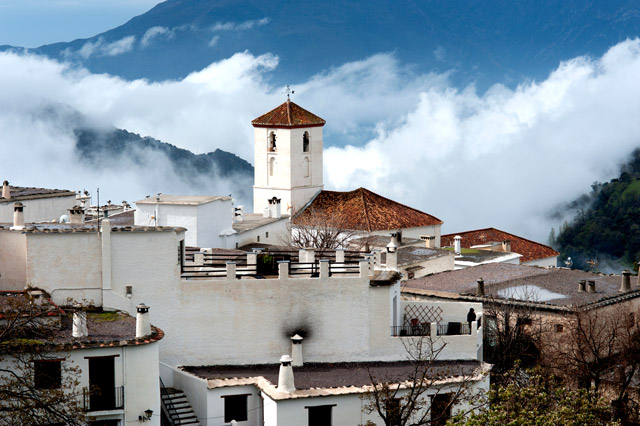 Starting in the picturesque village of Capileira we descended to its neighbour Bubión via a local track, saying hello to locals out inspecting their allotments on a Sunday morning, before joining the official GR7 trail as it climbs through native holm oak and replantation pines up to the hamlet of Capilerilla (population 23). We made a stop in Pitres, the largest town in the area (population 419!), for a bocadillo and cerveza, to fortify us for the not too demanding final leg, the 30 minutes meandering descent to the Hotel Mecina Fondales.
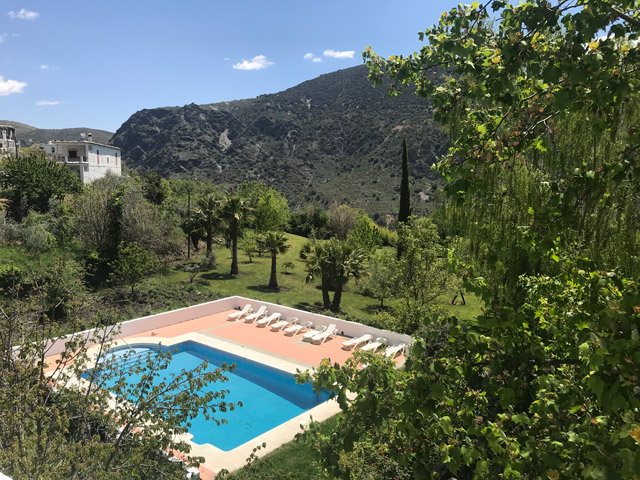 The hotel’s pool, set in the garden of cherry trees, lawns and rose bushes, had been our motivation for the prompt start and although the walk from Capileira, a mere 8.5 kms, is the shortest on the seven days itinerary Andalucia: Along the GR7, we nevertheless felt entitled to our indulgent afternoon of sunbathing and gentle laps in the pool.
I spoke to Victor Fernández, owner of the hotel, about his experience of lockdown and although the forced enclosure of 14 weeks had been financially and emotionally tough he said there had been bonuses, such as time to cook for just himself and his wife, as well as time to read some of those “for a rainy day” books. Victor is encouraged by the gradual return of visitors to the Alpujarra – a region which was thankfully unaffected by the coronavirus – and by seeing walkers once more on the many trails that link the villages of the region as well as the GR7 itself. From Victor’s we set off in the morning for the next leg of the itinerary that makes up for yesterday’s lenience by being the longest stretch and possibly the toughest, at 15 kms, taking us to Trevélez.
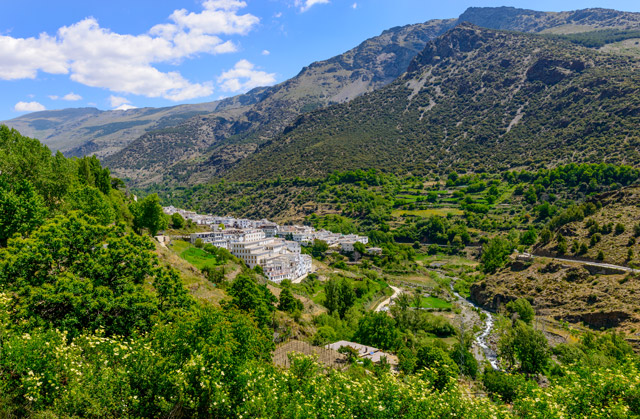 The way begins on local paths before picking up the GR7 in Busquístar, following it all the way to Trevélez as it takes you alongside and above the deep valley of the Río Trevélez, its snow melt waters descending from the high peaks of the Sierra Nevada. At an official altitude of 1,486m above sea level Trevélez lays claim to be the highest village in Spain. In fact, in the Spanish Pyrenees there are several villages at up to 1,700m altitude which in themselves have a better claim to the title, but Trevélez trumps them all on the basis that the peak of Mulhacen (3,478m) lies within its municipal boundaries – hence conclusively winning the argument, albeit rather on its own terms…
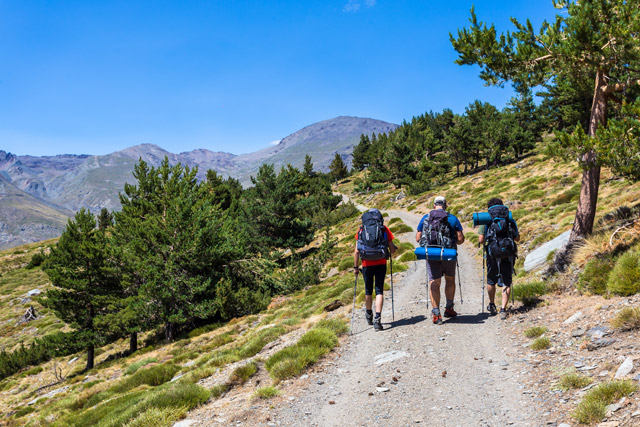 Wherever the truth may lie what is certain is the sense of “end of the world” that Trevélez exudes, its hilly streets and whitewashed houses alone with the mountains, and that as a refuge from current times there are few better places than the Alpujarra.
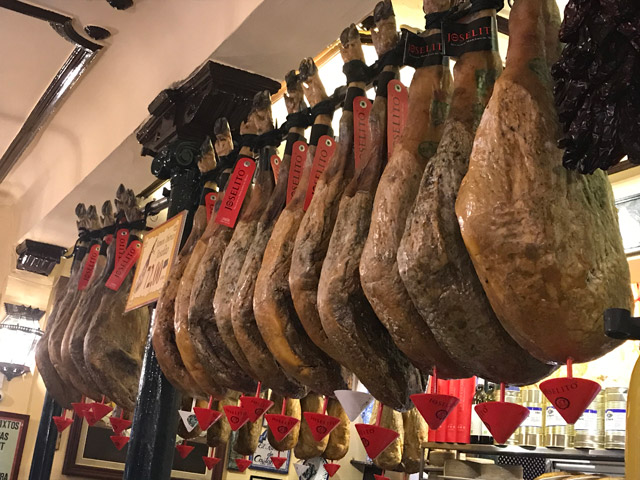
The other claim to fame of Trevélez is its ham: pink, succulent wafers of jamón serrano – the terms mean literally “ham of the mountains” in recognition of the fact that the cooling airs of the mountains are ideal for the curing and ageing of the hams. The town indeed is a recognised “denominación de origén” for its ham and counts the Spanish royal family as among its patrons. We paid homage too by ordering a ración (portion) in one of the towns inviting bars, sitting out on a terrace with views down to the river, but if your interest extends to how the process of curing works several of the curing sheds, called “secaderos” will give you a short guided tour and a complimentary tasting.
Contact our friendly team to find out about our Andalucia: Along the GR7 trip, or any of our other walking holidays to Spain.