The Legend | Count Dracula
 Dracula first appears in the novel published in 1897 by Irish writer Bram Stoker, though vampire folklore is much older. In Stoker's novel, a Transylvanian count lives in a decaying castle, perched high above a valley with a flowing river.
Count Dracula is often confused with Vlad Tepes (Vlad the Impaler) sometimes known as Vlad Dracul, a Wallachian prince who also lived in a castle, now in ruins, in neighbouring Wallachia. Although Stoker never visited Romania, an etching in the first edition of Dracula bears a striking resemblance to Bran Castle. As Bran is the only castle in Transylvania that fits Stoker’s description, it is now known worldwide as Dracula’s Castle.
The name Dracul, given to the 'bloodthirsty' Vlad Tepes who ruled Wallachia from 1456-1462, derives from the Crusader Order of the Dragon. The rest of the myth comes from Transylvanian popular legend.
In the villages around Bran, people believed in evil spirits known as steregoi, or the undead. Until the mid-20th century, the souls of some people who led a normal life by day were thought to leave their bodies at night and torment villagers while they slept. These evil spirits remained at large from midnight until the first cockcrow, when their powers faded.
Stoker’s character is an ancient vampire and sorcerer who claims to be descended from Attila the Hun.
The Trip | Land of Dracula: Walking in Transylvania
The Legend | Witches and Spectres
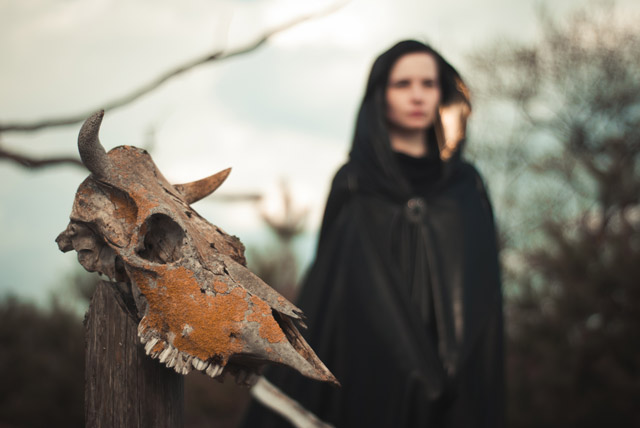 In German folklore, covens of witches on broomsticks meet on the Brocken on Walpurgis Night (30 April, or the eve of May Day) to dance around a bonfire and worship the Devil. In the villages of the Harz, the local people dress like witches and devils and try to expel the witches with fireworks.
Goethe referred to the witches of the Harz Mountains in his two-part tragic play, in which the ageing scholar Faust sells his soul to the Devil. The area’s reputation for mysterious happenings is further enhanced by the so-called Brocken Spectre, a phenomenon caused when an onlooker’s shadow is cast in mid-air on the frequent mist or cloud. Depending on the angle of the light, this shadow can be huge and set within rainbow-like rings - an eerie illusion that has long fed the imagination of local residents.
The Trip | Germany: Along the Harz Witches Trail
The Legend | The Devil, a Fairy Tale and a Curse
 According to one Albanian legend, the devil created the Accursed Mountains, however another tale tells of three brothers who went hunting and met a fairy.
The fairy was so beautiful that the brothers quarrelled violently over which of them could have her - ending with the death of all three. Looking on from afar, the fairy hoped they would agree, but was unable to help by choosing for them. When the brothers died, she hid behind the mountain peaks.
After days had passed without word of her sons, their mother took up the search. On finding them dead, she buried them, and her wailing echoed through the mountains. The fairy heard her and explained that they had died due to the argument over her. But the mother didn’t want to know and, blaming the fairy for their deaths, cursed both the fairy and the mountains. The range has been known as the Accursed Mountains ever since.
The Trip | Albania: The Accursed Mountains
Did you enjoy reading about these fantastical walking adventures? Speak to our friendly travel consultants to find out more or arrange your hiking holiday, call 01962 302085 or get in touch.