Walks Worldwide, Self-guided, Guided, Walking Holidays, Trekking Activity holiday Walks Worldwide, Self-guided, Guided, Walking Holidays, Trekking Activity holiday

"To the Ends of the Earth" - Chile and the Falkland Islands

Walks Worldwide Trip Report

Monday October 29th to Monday November 12th 2007

Roger and Chris Bennett, Nottinghamshire, England

Day 1 Following the short trip to Madrid and an easy transfer between terminals we settled down for a very relaxed night flight to Santiago awakening to the magnificent sight on the left hand side of the plane of Aconcagua, the highest mountain in the western and southern hemispheres at 6959m..

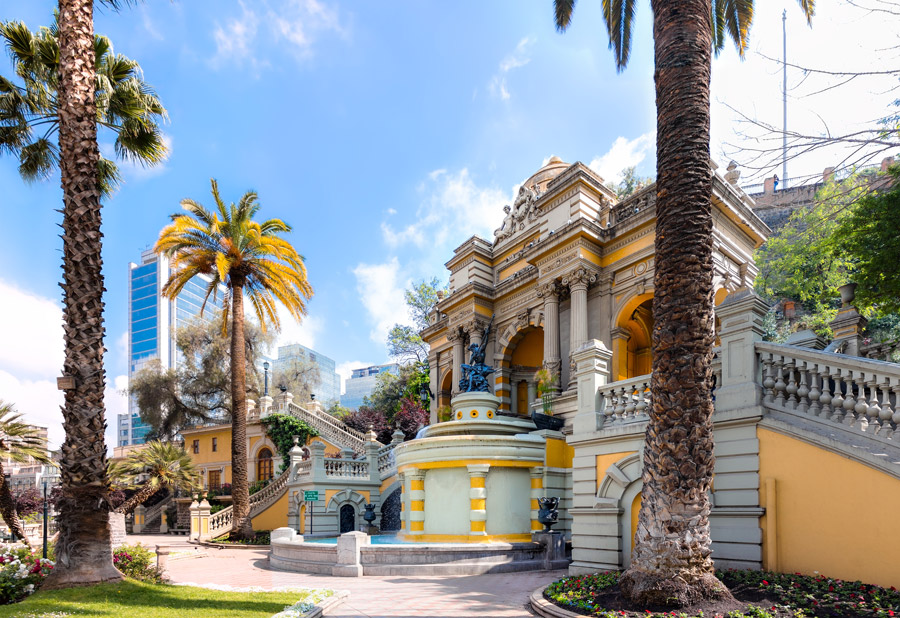
Day 2 Following an interesting transfer from the airport to our comfortable hotel in central Santiago we were able to check in and have a quick lunch and a short rest prior to the afternoon city tour. Mario, our guide, was excellent, showing us both the main sights and a few places that were off the main tourist routes. The cathedrals, old buildings that have survived the earthquakes and the newer re-build such as the President's Palace were very interesting, especially as Mario was able to put it all into the appropriate eras that Santiago has experienced over its existence. We were so interested in seeing, photographing and hearing about it all, that we rather ran out of time and ended the day with a late dinner before an early rise the following morning to head south.

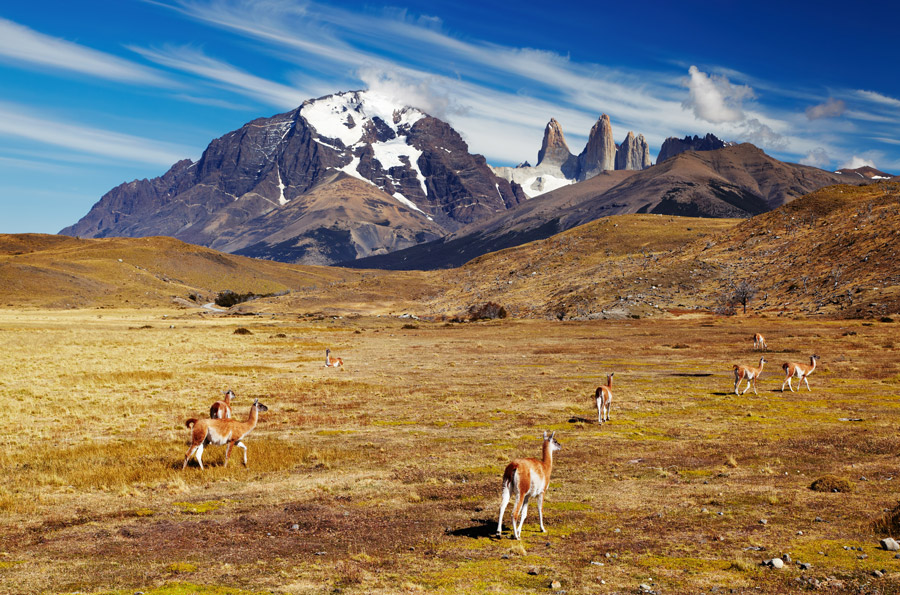
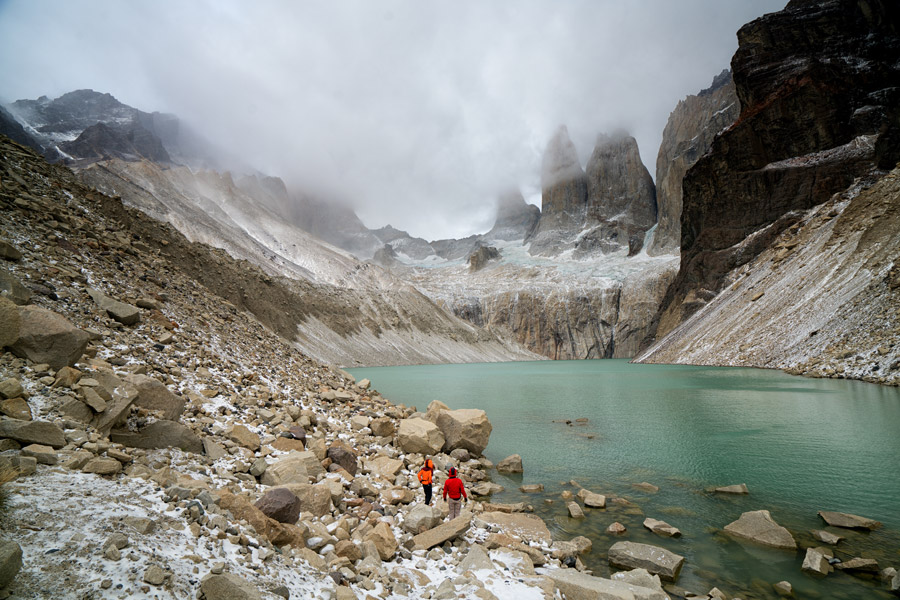
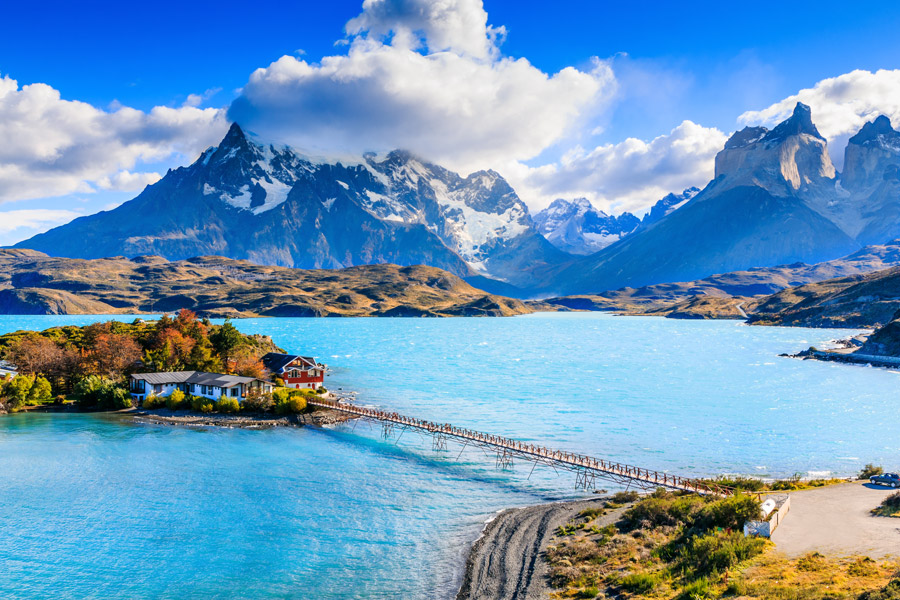
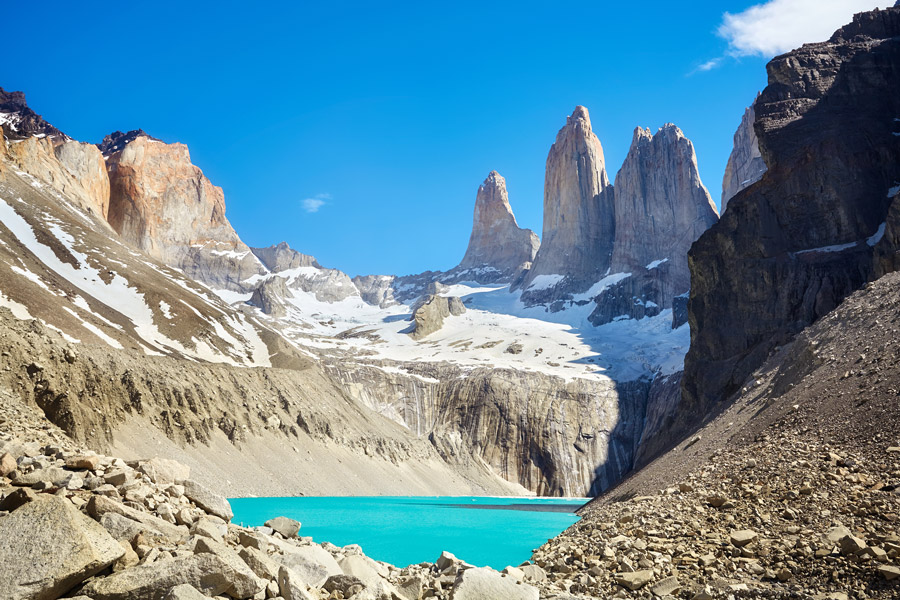
Day 3 The early morning flight on the excellent LAN airline was made more interesting by the array of different groups flying south. The largest of these groups were the game fishermen, laden with rods, nets and creels, all heading via Puerto Montt to the famous Chilean Lake District. After the stop in Puerto Montt the plane refilled with passengers and one realised how critical air transport was to a long, thin country with limited North - South transport infra-structure. Punta Arenas is not the prettiest of towns as it appears its sole reason for being is just as a waiting place for people travelling by plane or cruise ship/ice-breaker to the South Atlantic and Antarctica. Having picked up some fellow travellers to the EcoCamp we headed north via a stop for lunch in pretty Puerto Natales and on to the Milodon Cave and then to Torres del Paine. The journey was long but interesting, plenty of flamingos in the southern area with lots of the endemic Chimango Caracaras waiting for their next prey on fence post or tree. As we neared the Torres every turn in the road revealed more and more of the waiting mountains rising in the north. The fauna also changed with our first condors soaring effortlessly on the thermals and a few hares and the odd skunk keeping company with the large flocks of guanaco. Having reached the National Park gates we were thrilled by the first full sight of the Torres peaks and the suddenly abundant birdlife exemplified by the brilliantly red breasted Long Tailed Meadowlark that posed in a nearby bush. A further 20 minutes and we reached the EcoCamp, our domed home for the next three nights. The camp was very well set out and was in the most spectacular setting being just under the eastern face of the renowned Towers of Paine peaks. Having unpacked, we were briefed over Pisco Sours and then we had the first of many delicious meals in the master dome that housed the dining room, bar and lounge of the EcoCamp. It also provided a place to recharge camera batteries - an essential requirement with the countless photographic opportunities the park offers. Our guide Maurizio had met us at Puerto Natales and had soon weighed up our interests and capabilities and he designed a programme that maximised our enjoyment within the limitations that the weather in the Torres can sometimes present. In our case the wind in the Torres was extremely fierce cancelling boat trips (the first time for 7 years!) and occasionally making us fear the tented domes would lift off and cause a spate of UFO sightings! However the weather was good, despite the wind, and we slept well in very comfortable and warm beds housed in our dome.

Day 4 Up at 5:00am to watch the sun rise magnificently, illuminating the tops of the Towers with the classic but rare view - at one stage looking like someone had painted the fingernails bright red on the digits of the Towers. A very filling breakfast and excellent ingredients for our packed lunches and we were off to explore the park. The wind prevented any boat activities so after a wonderful walk via Salto Grande, the largest waterfall in the park to a spectacular viewpoint that overlooks Lago Nordenskjold and the magnificent Cuernos or Horns of Paine that rise right from the lake and then back onto the South Andean ice-field with its countless glaciers. Here, the benefit of the wind was that all the mountain tops were clear giving wonderful panoramas in all directions. After a quick drive we then walked a short way to Laguna Sarmiento, an amazing almost coral encrusted lakeshore where mountain lions are known to prowl and drag their prey into lakeside cavities. Maurizio told us that he had often been here when the acclaimed BBC wildlife documentary producer, Hugh Miles, had being making his award winning film on the puma. Having carried our lunch there we enjoyed a fabulous al fresco meal with the deep blue water contrasting the bright white lakeshore while we scanned horizons and hoped for a glimpse of the elusive lion, but not this time unfortunately.

We then undertook a long walk from one of the park gates across to another gate, following a path that skirted the park boundary all the way. This gave us a very interesting insight into the mammals and birds of the Torres and we crossed some beautiful unspoilt terrain. The park boundary is fenced in this area largely to keep the neighbouring ranchers cows from wandering into the park. The fence however is constantly jumped by the wild guanaco and often the younger or older ones fail to complete this task providing the birds of prey with a regular supply of carcasses to feast upon. So we saw a whole host of birdlife including close encounters with the magnificent Crested Caracara and good views of Condors, Rhea, Southern Lapwing, Dark-faced Ground Tyrant and the incredibly bright Patagonian Sierra Finch. We were then driven back to camp for another great dinner accompanied by good wine and stories allowing us time to re-charge our own batteries at the same time as our exhausted camera batteries.

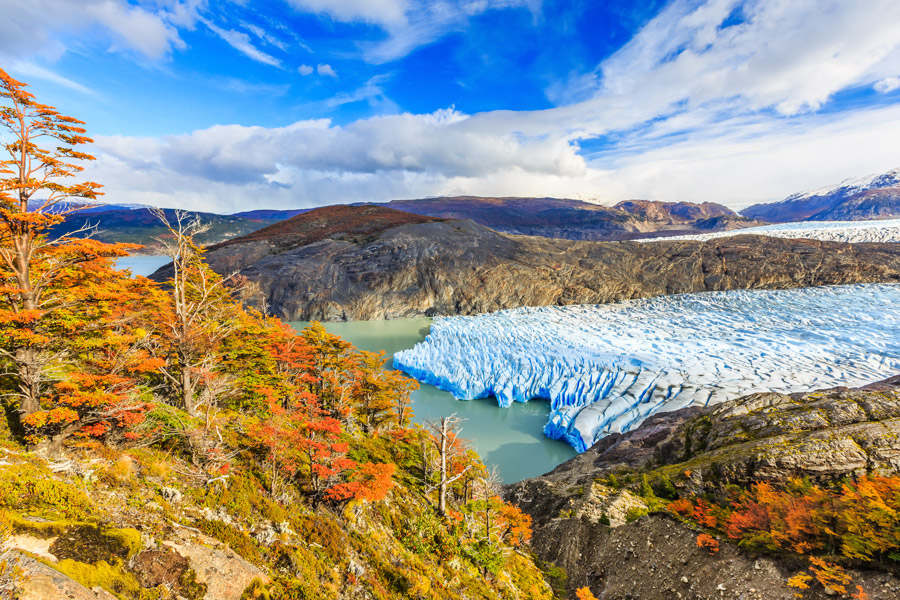
Day 5 The wind had abated and so boats were back crossing the lakes today and we headed out to Lago Grey to see the glacier and the icebergs that float on the lake. We started though with a walk along the Pingo River to a waterfall. This area is very different and provides good bird spotting opportunities including the wonderful named trio of Thorn Tailed Rayadito, Black Shinned Siskin and Fire Eyed Diucon all of which we saw well. Unfortunately the Torrent Ducks we had seen on a previous trip were proving elusive. It was a most enjoyable walk although by the time we returned to catch the boat across the lake the cloud had come down and we were met by a cool drizzle. As we approached the pier to catch the boat we were overflown by a pair of full grown condors that settled into their nest on the cliffs above us. The boat trip was fantastic taking us from the southern end of Lago Grey where icebergs accumulated close to the shore right up the lake to view where the main glaciers meet the lake in three major faces that occasionally calve icebergs into the lake. The brilliant blues of the ice within the glaciers are unbelievable, causing photographic digital memory to be absorbed at an amazing rate of knots. Once we and our cameras had had enough of this visual feast we slipped back into the main cabin to be warmed up by the inevitable Pisco Sours and a very refreshing cup of coffee. All in all this was an excellent end to our short time in the Torres with the wonderful views of the glaciers providing an enduring memory. So then back to the Ecocamp for a final dinner and swapping of addresses, as tomorrow after another early rise we start the next phase of our trip.

Day 6 Woke early to complete our packing that was interrupted by fabulous sunrise views of the Towers of Paine once again - we were so lucky to have been graced with such great visibility as sometimes we were told it can go months without good views of the tops. After a quick breakfast we were on the road for the long but much quicker return trip to Punta Arenas. We stopped several times for great views back to the mountains and also for the abundant wildlife that was blissfully unaware of our presence on this early morning journey. We left our guide Maurizio in Puerto Natales and our driver then sped south to Punta Arenas for the lunchtime weekly LAN flight to the Falkland Islands. After a pleasant flight of under 2 hours we landed at Mount Pleasant Airport to be greeted by hail and a little snow. Jo, who was our contact for this part of the holiday, then informed us that the temperature in the Islands was about 10C lower than normal as we drove from the huge RAF camp to our first stop in Darwin. However the weather brightened up and we were greeted very warmly at Darwin by Bonnie and Ken. First thing on the agenda being to get ourselves and our repacked luggage weighed so the subsequent flights by FIGAS aircraft hopping around the islands could be properly balanced. I think it was lucky we did this first thing on arrival as the array of cakes and wonderful dinner that Bonnie provided would certainly have tipped the scales upwards. After the tea and cakes, Smoko in the local lingo, we headed out for a walk past the Gaucho Corral which has the amusing placement of a golf green in the centre of the circle made by its eight foot high wall. We then followed the cliff path through the gorse to where a magnificent pair of Red Backed Hawks had built their nest close to the path on the cliff edge. They posed for the inevitable photographs occasionally screaming loudly at us until finally we headed up the hill. The reason for the climb was to reach the Colonel H Jones Memorial where our first wartime reminder was of the charismatic leader of 2 Para Regiment who died on this critical assault during the battle of Darwin-Goose Green. The memorial atop the hill looks down on both settlements and gives a chilling reminder of the war fought defending the rights of a very small number of Islanders in such a remote outpost of our territories. The obvious debt of gratitude to the British nation by the "Kelpers", the native Falkland Islanders, was hugely evident, especially at a time when the 25th Remembrance Day since the end of the conflict was about to be marked with a large group of veterans returning to the Islands. We returned to the warmth and comfort of Bonnie's house and her fantastic cooking before sleeping very soundly after a long day.

Day 7 Another early rise and a brisk walk in the frost before breakfast saw several large hares and a couple of families of the comical Falkland Islands Flightless Steamer Duck - a bird so confident in the lack of real predators it has failed to learn how to fly. This is in fact a real treat in the Islands as the birds and animals don't run or fly away in human presence, as we were to witness at our next destination, Pebble Island. After a hearty breakfast it was off to the grass airstrip above Darwin where Bonnie and Ken became firemen, radio operators, weathermen and air traffic controllers as our first red FIGAS aircraft descended from a clear South Atlantic sky to complete a perfect touchdown a few yards away from us. The mail and supplies were exchanged, a passenger alighted and then we boarded for our first flight. The safety briefing was concise and to the point and we were soon off enjoying the great views one gets from low level flying across land, lakes, rivers and sea in the classic 8 seat twin turbo-prop engined Islander aircraft. After just half an hour we were landing at Pebble Island to be met by Alan and Jackie our hosts at the Pebble Island Lodge. Pebble Island is inhabited by only three families of which one depends solely on tourism and the others by raising sheep. After unpacking we were soon off on a 4wd tour of the east end of the Island with Jackie. There are no roads so this was definitely cross country travelling with me jumping out at each gate to do the honours. As we travelled the true wonder of the wildlife was exposed, beautiful Two Banded Plovers with young, wonderfully camouflauged Snipe, beautiful Silvery and White Cheeked Grebes on a pond, Upland Geese on their nests or with newly hatched chicks, Falkland Island Pipits, Chiloe Wigeon, Black Necked Swans, Speckled Teal, Red Backed Hawks, Dark Faced Ground Tyrants and finally our first penguins, a sporadic colony of Magellanic Penguins tucked into burrows and sitting on eggs. We then came to steep cliffs where a large colony of sealions had hauled themselves out onto the rocks whilst the Southern Giant Petrels and Black Browed Albatross flew effortless along the coast. Having counted the sealions, a record number Jackie was pleased to report, we moved onto a most amazing colony of Rockhopper Penguins living cheek by jowl with a host of King Cormorants. The Rockies were incredible climbers as they seemed to scale vertical cliffs by the simple expedient of hopping from ledge to ledge. As they build their nests at the top of the cliffs this is a necessity and we watched spellbound as a long stream of these birds made their way down or up depending on the time of day and need for food. All of the penguin pairs seemed to have eggs that they jealously guarded from the attentions of the Falkland Island Skuas, classic opportunists with a real taste for the odd penguin egg. Next to the Rockies were King Cormorants a very striking bird with brilliant blue eyes and a knobbly orange growth at the top of their beaks. These birds were constantly flying back and forth, usually with a mouthful of smelly seaweed destined to reinforce their mates nests that resembled weird brown moon craters. Then we moved onto a group of Gentoo Penguins that were nestled down in the diddly-dee plants, similar to a type of heather, where we witnessed a successful Skua swoop and grab an unattended egg and fly off for its supper.

We made our way back to the settlement via the Caribbean style Elephant Beach where South Atlantic Terns toured the 4 miles of white sands and surf, diving nonchalantly for a meal of small fish. Hosts of ducks, petrels and gulls gathered here and just short of the Lodge we found a single King Penguin on the beach, presumably off course but apparently waiting to moult. The size of the King in comparison to the other penguins is very marked being almost twice the height of the Rockhoppers or Magellanics. It also has the beautiful face markings similar to the Emperor Penguins made famous by the recent films and documentaries. A fitting end to a great day.

Day 8 The up early habit was reinforced by the prospect of a short walk to a pristine beach with a King Penguin and beautiful sunshine. Back for a hearty breakfast and we were then off on a trip to the west of the island. Here reminders of the war included the HMS Coventry memorial and a couple of sites with the remains of crashed or blown up Argentine aircraft strewn over a large area. As we continued, we rounded a headland and saw a small beach on one side of which there was a Southern Giant Petrel nesting site. There were literally hundreds of these huge handsome fliers that the locals call Stinkers because of their less than delicate habit of regurgitating and spitting out the contents of their stomachs when disturbed.. There was also a large Gentoo colony on the slopes at the back of the beach and a continual crocodile line of Gentoos crossing the pure white sand. Chris stationed herself behind a small rock in the middle of the beach and was able to witness and video their comical comings and goings from literally a couple of feet. Our second lengthy stop was at a cliff top Rockhopper colony where we saw a few stray Macaroni Penguins with their bright orange extended eyebrows. Nestled amongst the Rockies was also an Erect Crested Penguin with its extraordinary double cream punk Mohican haircut. Apparently this vagrant from somewhere south of New Zealand has quite happily adopted this colony for several years. We lunched here at the western tip of this small island and reflected that we truly felt at "The End of the Earth" as promised by Walks Worldwide.

We then visited a very different type of beach where the pebbles were often of pure agate, some almost translucent blue with white inclusions and others a darkish green with lighter blue streaks. We now knew how the island came to be named and we spent a good half hour rock hunting for Jackie and Alan who then polish these stones and sell them as souvenirs. As we continued back past Marble and Middle Mountains we came across two large Gentoo colonies a good half a mile from the sea. They were happily settled down amongst the diddly-dee with one group accompanied by a lone King who resembled a high court judge with his head of moulting grey fur setting off his newly appearing sleek penguin dinner jacket. Suddenly Jackie started jumping up and down in delight as she spotted the first chicks of the season sheltering at the warm base of their parents' tummies. As we looked we saw more and more of the young, with some almost disappearing into their mums' throats as they received their first feed of regurgitated fish. It was wonderful to see the delight a Falkland Island resident took in this discovery, something she will have seen many times before. So it was back to the Lodge and a delicious dinner of the locally caught Toothfish.

Day 9 Another early trip to the beach before breakfast to see the lone King Penguin we had adopted, again in brilliant sunshine. After filling up on bacon, eggs and tomatoes it was back to air traffic control duties. Chris hoisted the windsock and we awaited our next flight. On the short trip to the strip Jackie spotted a Peregrine Falcon whizz past and she thought they nested at the back of Middle Mountain. These birds have no natural prey on Pebble and have to fly to tiny outlying islands to catch the Fairy Prions, small white sea birds, that make up the main part of their diet - no well fed British pigeons here to make an easy meal! So we were then off on the relatively short hop to Port Howard on West Falkland Island. Here we were met by Sue and Wayne, our hosts at the Port Howard Lodge. Sue has an amazing personality, born and bred an Islander with an extraordinary accent that combined West Country and raw Norfolk drawls. She had initially worked as a waitress at the lodge before having an extended spell in England after which she returned to Port Howard and bought this lovely old Lodge. It reminded me of a sleepy Highland hunting lodge with its oak panelling and high ceilings.

We decided the walk up Mount Maria behind Port Howard was too good to miss despite some threatening clouds, so we got into our walking gear and were then amazed to see the size of the packed lunch Sue had prepared for us. Luckily my capacious back pack got it all in, including the vacuum flask for coffee she had provided. As we set off the cloud kept scudding past whilst we walked up in glorious sunshine. The evidence of the 45,000 sheep at Port Howard was all around as this was the start of the shearing season and the shepherds (on their motorbikes!) were out in force gathering the thick wooled Merino for their annual haircut. As we got higher we were joined by a string of the lovely Rufous Chested Dotterel, small plover like birds that stopped a few feet away on rocks or bushes giving their distinctive warning cries before darting off to their next perch. About halfway up the stiff climb we came to an outcrop of rock that created sheer cliffs on which two Red Backed Hawks were busily building one of their several nesting sites. These wonderful fliers gave us a tremendous aerial display as they realised we were passing right under their newly constructed nest, swooping to scare off these unexpected intruders.

The climb got quite stiff as we neared the summit and the raw wind made us happy for the warmth of the exercise. Various cairns guided us to the top where the main Islands TV transmitter was stationed. It was strange to see a Landrover here and all the communications equipment housed in very well secured Portacabins. The TV reception had recently been poor and a specialist on their dated transmitter had been flown in from Cyprus to try and fix the problem. He was most surprised to see us there although he and his mate took time off to chat for a while - we passed on the hopes for a quick fix from the Islanders who had all seemed to mention the TV reception problem. The panoramic views from the top were good although a short snow flurry hastened our return. We decided to descend on a different ridge and were able to find our way down across the area of boulder scree relatively easily. As we neared the bottom we realised we had gone a little too far to the left and come up against an area fenced because of wartime land mines. Everything is very well marked on the Islands and there was no chance of wandering into a mined field, but we had to divert off and drop down to a river bed to skirt the excluded area. Whilst doing this I managed to tread into a moss covered bog and got a good soaking and foul smell for my troubles. As we neared Port Howard we noticed two Turkey Vultures sitting in one of the few trees that grew in the Islands. As we watched they suddenly both spread their wings wide to catch the heat of the sun as it slowly set - an incredible sight captured with some good photos.

Once back at the Lodge, after a quick bath, we headed down to the pier where apparently you can knock on the stanchions of the jetty and the curious Commerson Dolphins will pay you a visit. Unfortunately our knocking techniques were not good enough or the dolphins were out of earshot so we decided that a pre-breakfast visit tomorrow might be more successful. Dinner at the Lodge was our first taste of Island mutton and it was fabulous - washed down with another excellent bottle of Chilean red wine.

Day 10 The pre-breakfast pier knocking did this time yield success as three dolphins came and dived under the pier giving us a glimpse of their sleek grey lines. Also under the pier was a prowling Black Crowned Night Heron on the kelp covered cross beams. Smaller than our heron but beautifully marked it seemed quite unperturbed by our noisy presence. We were not the only ones up at 6:30am as the hub-hub from the shearing shed clearly showed. This was a hive of incredibly well organised activity that used a production line approach to getting the wool off the backs of the sheep. A line of 5 shearers received sheep through chutes and removed the fleece whilst women then grabbed, spread and folded the fleeces all in one efficient action. All the offcuts were removed and bagged and the whole area kept as spotlessly clean as possible by constant sweeping. Once sheared the poor sheep was dropped through a trap door onto the open paddock below where they wandered back to their fields. Each shearer would achieve about 300 fleeces a day amounting to a total of 1500 - this meant it was nearly a month of constant shearing to complete the whole flock of 45,000! After breakfast we headed out to the airstrip for the longer flight to the very south of the Falklands and Sea Lion Island. Sea Lion is a tiny island, just inhabited by the Lodge Manager, her three Chilean helpers, a Scottish chef and a couple of research students who were respectively counting and ringing Two Banded Plovers and Rufous Chested Dotterel and watching and marking the Elephant Seals. On arrival we were given the option of a tour around the island and took this to get acquainted with where things were. This was truly wildlife heaven, with too many bird species to mention and the fantastic elephant seals. The 8 foot high Tussock grass area also added to the difference, and we felt we really were on a desert island filled with natural delights. Two birds delighted us. The endemic and totally unafraid Tussac Bird that really is only seen here on Sea Lion Island was always keen to be under your feet, looking for insects dislodged as one walks. If you stop and turn a stone over it is in heaven as it dashes to catch the flies and beetles exposed. The second bird is the Striated Caracara, again largely restricted to Sea Lion. This very handsome, brown and orange feathered bird has bright yellow beak and legs and is very cheeky, known to try and take anything shiny including small cameras. They are also very tame and will come very close to you. There are also plenty of penguins including Magellanic, Rockhopper, Gentoo, a few Macaroni and the odd King. The cross island march of the Gentoo's is particularly comical and to watch at sunset, as vast numbers returned through the surf from fishing to the nesting sites, was truly awesome.

The Elephant Seals however really took one's breath away. The giant bulls that appeared to be about 3 or 4 times the size of a Hereford cow were fantastic, guarding their harems of much smaller females and their pups. The younger bulls were incredibly frisky, keen to catch the attentions of females without disturbing the alpha male bulls. These younger ones also fought ferociously to what appeared to be near death, using their huge bodies as battering rams and their fierce teeth ripping into their opponents blubber until both were dripping with blood. We watched transfixed as the fight unfolded in front of us until finally the two bulls collapsed on the beach and flicked sand onto their blooded bodies to try and inhibit the attentions of the Caracaras who were eyeing them hungrily. We spent hours in this haven walking from one incredible sight to the next, As dinner time was approaching, Chris went back via the penguin colonies but I decided to explore the Tussock Grass area and was rewarded with some beautiful sightings of the chestnut brown Cobbs Wren, a Ruddy Headed Duck family and I almost trod on some startled Magellanic Penguins making their way back to their burrows. A very pleasant meal ended another incredible day.

Day 11 Once again the mandatory early morning stroll to the beach with a couple of beautiful sightings of the Magellanic Snipe making their classic drumming sound in the short grass. On the beach we tried to avoid the scattered Elephant Seal bulls with their clusters of admirers as I scanned the sea for the Killer Whale pods that are known to cruise this stretch of shore. Unfortunately they didn't appear although the profusion of other wildlife more than made up for this minor disappointment. Another hearty breakfast and we were waiting for our next flight, this time to Stanley and civilisation. Jo met us at Stanley Airstrip and we were reunited with the balance of our luggage that we had left with her at Darwin as it was too heavy for our few days of FIGAS island hopping. We checked in at our comfortable Bed and Breakfast positioned right on the harbour front and were soon met by Tony Smith, a local military historian with an inexhaustible knowledge of the conflict. He took us for a fascinating walk up Mount Tumbledown, retracing the steps of British soldiers as they fought to gain back this wonderful vantage point from the Argentinians. The knowledge he has gained by his research and his time spent with veterans on the mountains gave the walk and talk a very real feeling and with the various artefacts of the conflict still in place it all seemed very recent. We were not expecting this element of the holiday to really be a highlight so were delighted we'd enjoyed it so much. Chris had particularly loved the high terrain for its superb rock formations. We ate out tonight at the excellent Brasserie Restaurant in Stanley, a very chic experience with all the refinement and culinary expertise of a top restaurant in England.

Day 12 Today we were met by Lisa for a cliff top walk across her land to Kidney Cove. The 4WD journey to the start point was however not for the faint hearted! There had been a lot of rain in Stanley when we were having sunshine on the islands and under wheel conditions were not easy. The ubiquitous Landrover dealt with this admirably and we were soon atop the cliffs at another classic Rockhopper penguin colony. Lisa then left us to walk the beautiful cliff path all the way to our final destination at Kidney Cove. The main highlights of this walk apart from the fabulous cliffs and rock structures were sightings of a Sie Whale and several pods of Commersons Dolphins that seemed to follow us up and down the coast. The area reminded me strongly of the Pembrokeshire Coast, the similarity of the fresh Atlantic breeze adding to this association. We met further colonies of Rockhoppers with the odd Macaroni hiding there until finally we reached the cove where Lisa was waiting. One final piece of excitement in the Landrover when Lisa bravely went straight through what looked like a sizeable lake and we were at the Gentoo colony that many of the cruise ship passengers visit when stopped in Stanley Harbour. Here the Gentoo wander across an active minefield to reach the sea, their light weight saving them from a potential nasty end. Within the Gentoos we also found a pair of King Penguins looking longingly in to each other's eyes - we were not sure what sex they were but you can always hope! As we reached the penguins it had just started to rain so the coffee Lisa made in the shelter by the colony was most appreciated. We then drove back to Stanley and dinner at the Malvina Hotel with old friends that were based in the Mount Pleasant base.

Day 13 Our friends who had stayed over in Stanley for the night picked us up in the morning and we drove out via the wreck of the Lady Elizabeth to Gypsy Cove, a delightful nature area relatively close to the capital. Our friends who were inevitably keen birders were delighted that we saw a swallow here, a rare migrant to the Islands, and I was able to confirm later from the photos I took that it was a Bank Swallow. This was the first time our friends had ever seen a swallow on the Islands. We finished our trip at Surf Beach a gorgeous stretch of beautiful sand that was once again bathed in bright sunshine. We said goodbye and were picked up by Jo to start our trip back to Santiago, There was a good wait at Mount Pleasant Airport to check in and Jo kept us company giving us lots of stories of life on the Islands and the time passed quickly. Jo had looked after us very well and we thanked her profusely for all her kind attention.

The LAN flight back was via Punta Arenas where we disembarked to stretch our legs and go through immigration before re-boarding quickly for the onward flight. There were glimpses of the lakes, mountains and glaciers from the plane as we followed the spine of the Andes but it soon got dark and we arrived into Santiago quite late. There we were met by Mario who whisked us to the hotel for a well earned sleep.

Days 14 & 15 Mario arrived after breakfast for our tour but brought news that the planned winery visit was off as they had had a major power cut. He quickly produced an alternative schedule and in no time we were near the top of Cerro San Cristobal, the highest hill in Santiago and on Sundays a mecca for every possible type of fitness enthusiast in the city. There were walkers, runners and bikers by the hundreds and at the top those seeking spiritual health at a huge outdoor mass under the massive statue of the Madonna. Wonderful views of the city and a fascinating experience that was topped off by a quick visit to the Museum of Chilean Wine situated within the San Cristobal park. We then headed out of Santiago to the Maipo Valley and the famed Casa del Bosque restaurant. It certainly lived up to its reputation for incredible architecture, service and quality of food. We then returned to the hotel who had agreed to keep our room available for a quick shower before we headed back to the UK via a very comfortable overnight LAN flight to Madrid and onwards to Heathrow.

Summary - This was a totally unforgettable experience that was so well planned and executed by Walks Worldwide and their partners in Chile and the Falklands. Despite the amount of travelling involved the schedule of geographic, cultural and natural delights kept us alert and enthralled. I loved the natural beauty of Southern Chile and the Falklands and our guides did a great job of keeping us informed at all times about our surroundings. I think the days on the outlying islands were my favourites because of the wonderful wildlife we constantly met but this takes nothing away from the rest of this fabulous holiday.

Many thanks, Helene.

Roger Bennett

For details of this itinerary, please click here